Know which chargers actually work.
EV Spectra reads live OCPP telemetry from every charge point on your network, detects faults with auditable rules, and explains them in language your operations team can act on — before a driver is stranded.
The problem
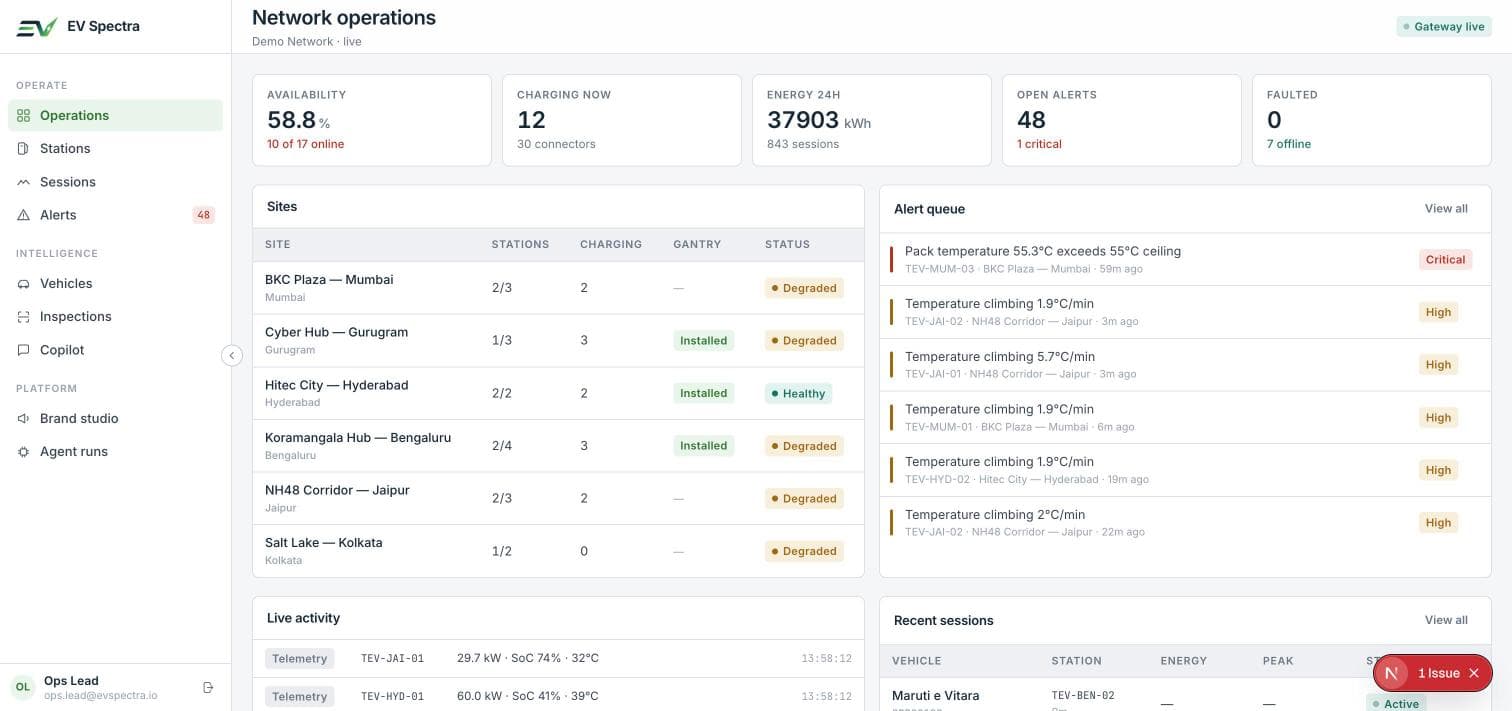
Uptime says the network is healthy. Drivers disagree.
Charging networks measure availability at the charger. Drivers experience it at the session. The two numbers have drifted so far apart that uptime has stopped being a useful operating metric.
Why now
“EVs are no longer an extra vehicle; they are daily-drivers.”
Narendra ModiPrime Minister of India — public remarks, reported by Fortune India, 2025
India's public charging network grew roughly sixfold between December 2022 and April 2025, reaching 29,277 operational stations, with national targets pointing at 80,000–120,000 by 2030. Capital is flowing into hardware and sites. Almost none is flowing into knowing whether that hardware works.
The approach
Detection you can audit. Explanation you can read.
Most platforms bolt a language model onto an alert feed and hope. We split the job: rules decide, models explain. Neither does the other's work.
A versioned rule engine decides
Every alert is raised by a threshold rule with its inputs recorded. Any alert can be reproduced months later, which is what makes it usable in a safety conversation or a warranty dispute.
Language models explain and rank
Once a rule fires, an agent writes the plain-language triage — what happened, why it matters, what to do next. It never sets state and never decides whether something is wrong.
Operators act without leaving the console
Remote start, unlock, reset and status requests travel over the charger's own live OCPP socket, so a diagnosis becomes an action in the same screen.
Station intelligence
Every alert carries its evidence
Thermal ramp rates, pack temperature ceilings, connector faults and offline transitions are detected on live telemetry. The rule that fired and the values that triggered it stay attached to the alert.
- Deterministic thresholds, versioned and reproducible
- Model-written triage with a recommended next step
- Severity that survives greyscale and colour-vision differences
- Acknowledge and resolve tracked per operator
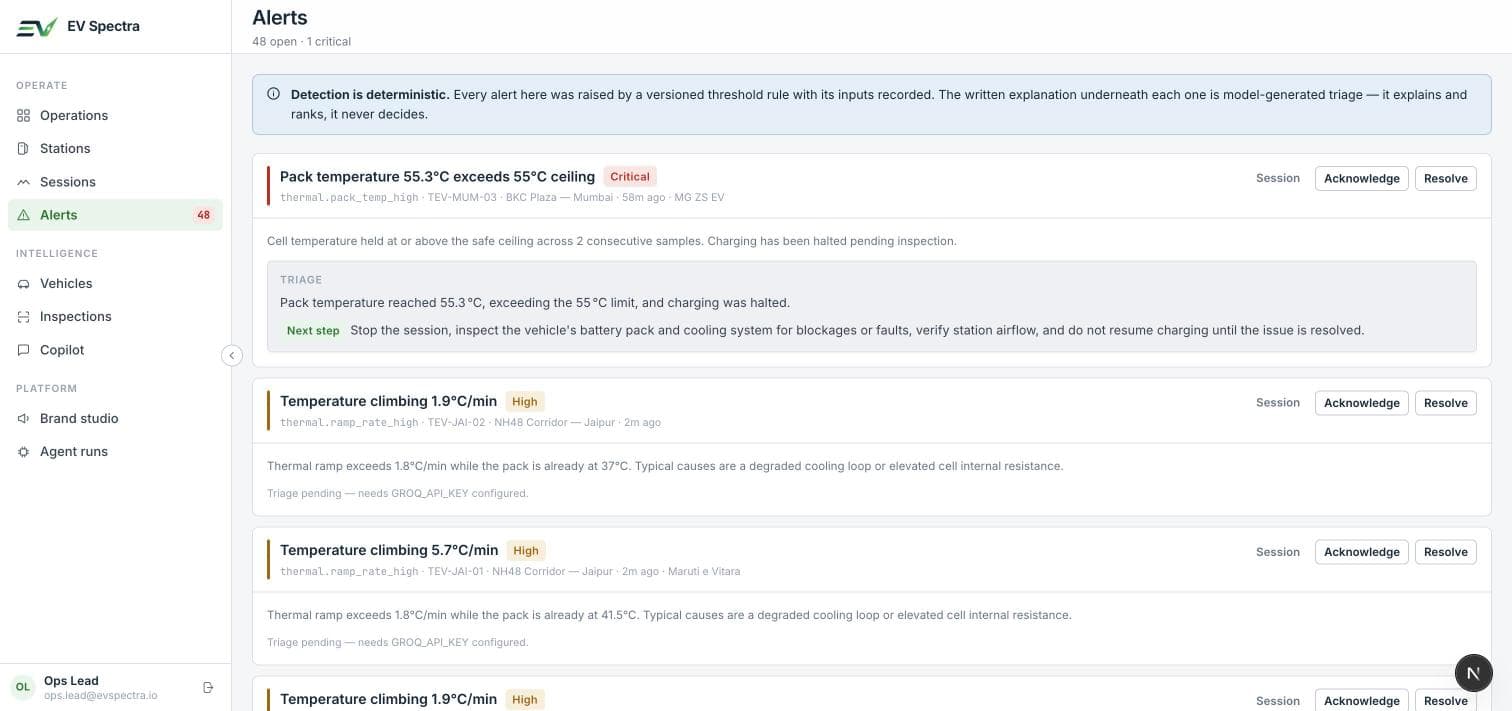
Alert queue — detection is deterministic; the written triage is generated.
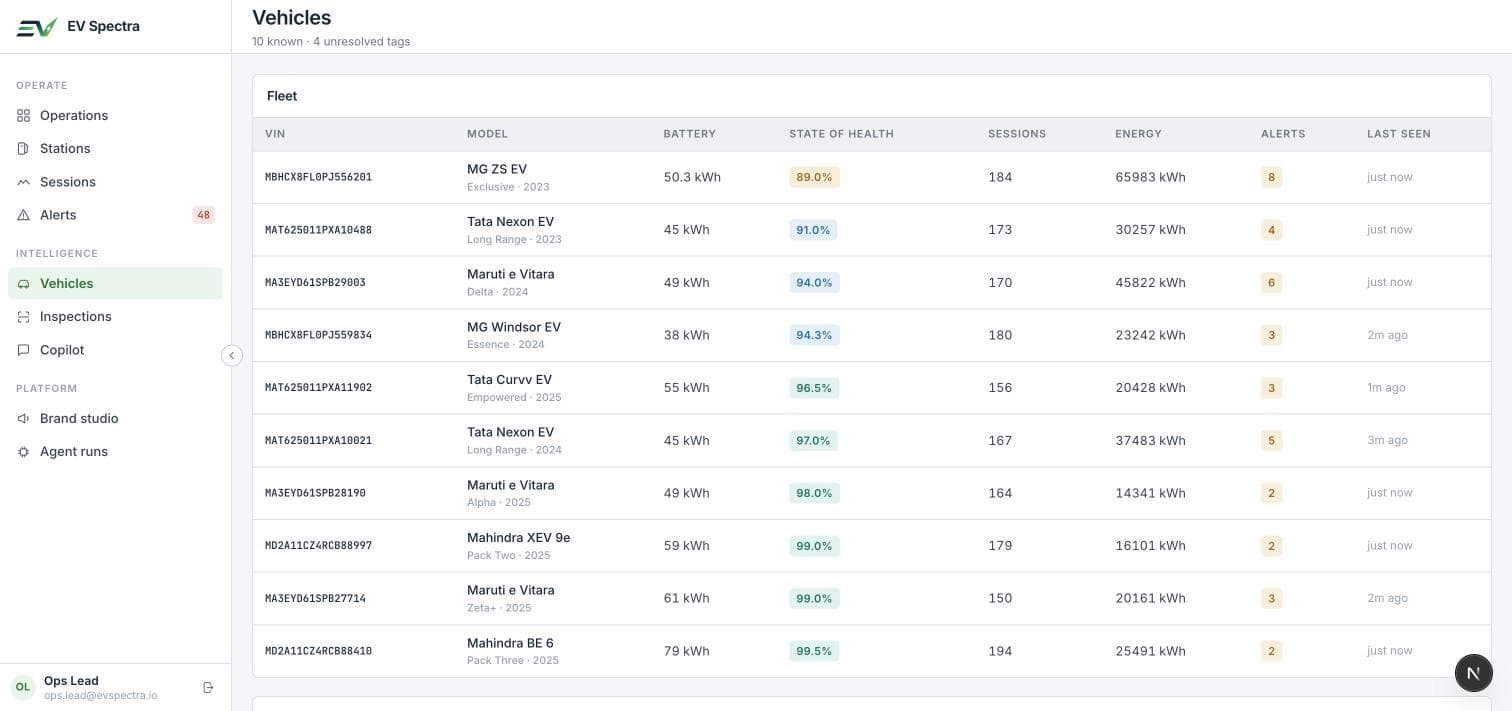
Fleet view — state of health estimated from observed charge curves.
Battery intelligence
State of health without dealer tooling
The charger already sees the vehicle's power ramp, its thermal behaviour under load, and how both change over months of sessions. That is enough to estimate pack degradation without an OEM API.
- Per-vehicle session history and energy delivered
- Degradation trend rather than a single snapshot
- Early warning on thermal behaviour that precedes failure
- Evidence for residual value at resale or lease return
Who it is for
Built for the people who own the uptime
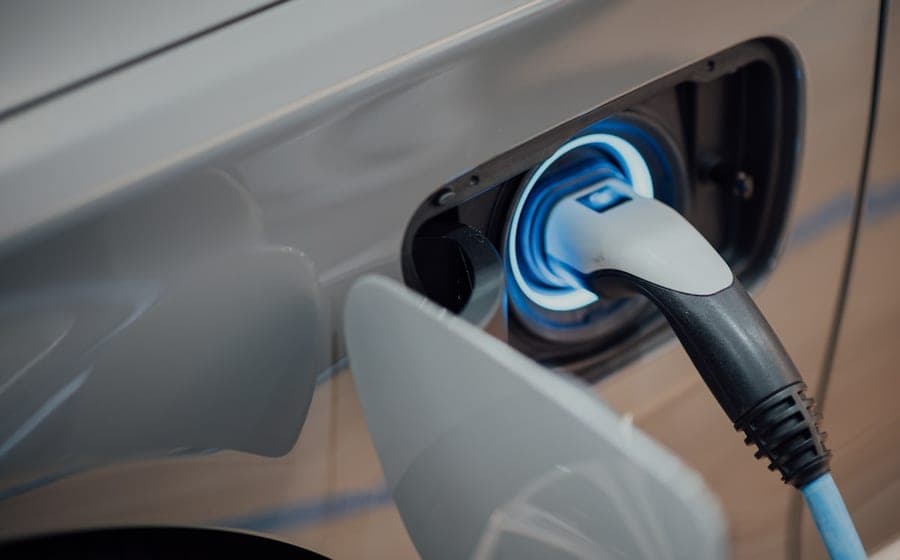 Public networks
Charge point operators
Networks running 50–5,000 public AC and DC charge points.
Session-level success tracking, deterministic fault detection on live telemetry, and remote diagnostics over the charger's own OCPP socket — so a technician is dispatched with a diagnosis, not a work order that says 'charger down'.
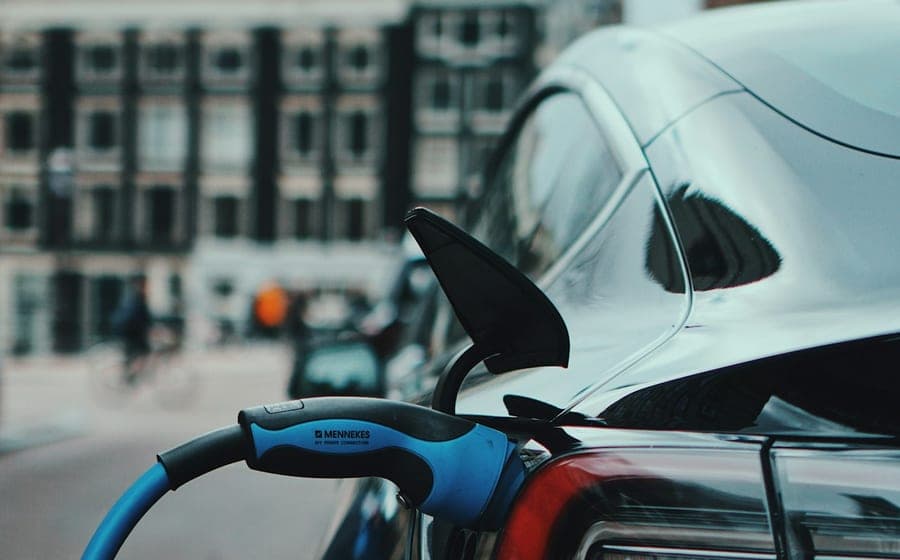 Commercial fleets
Fleet operators
Commercial fleets — logistics, ride-hailing, corporate transport.
State of health estimated from real charge curves rather than odometer heuristics, per-vehicle history, and early warning on thermal behaviour that predicts pack failure.
 Hardware
Hardware manufacturers
Charger OEMs shipping OCPP-compliant hardware.
A vendor-neutral telemetry layer that attributes failures to component, firmware version and site conditions — turning warranty disputes into engineering data.
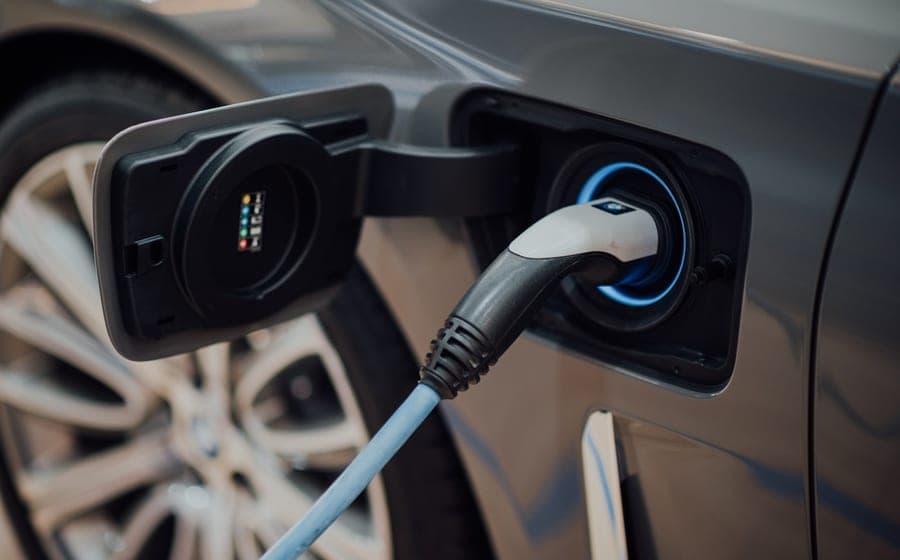 Sites & utilities
Utilities and site hosts
Discoms, malls, highway operators and workplace hosts.
Independent visibility into site-level availability and energy delivered, with an auditable record of who was notified and when.
Point a slice of your network at us
An evaluation changes one thing on the charger — the OCPP backend URL — and is reversible. Within weeks you have a session-level picture of how your network actually performs.